Showing posts with label cauliflower. Show all posts

Saturday, November 7, 2015

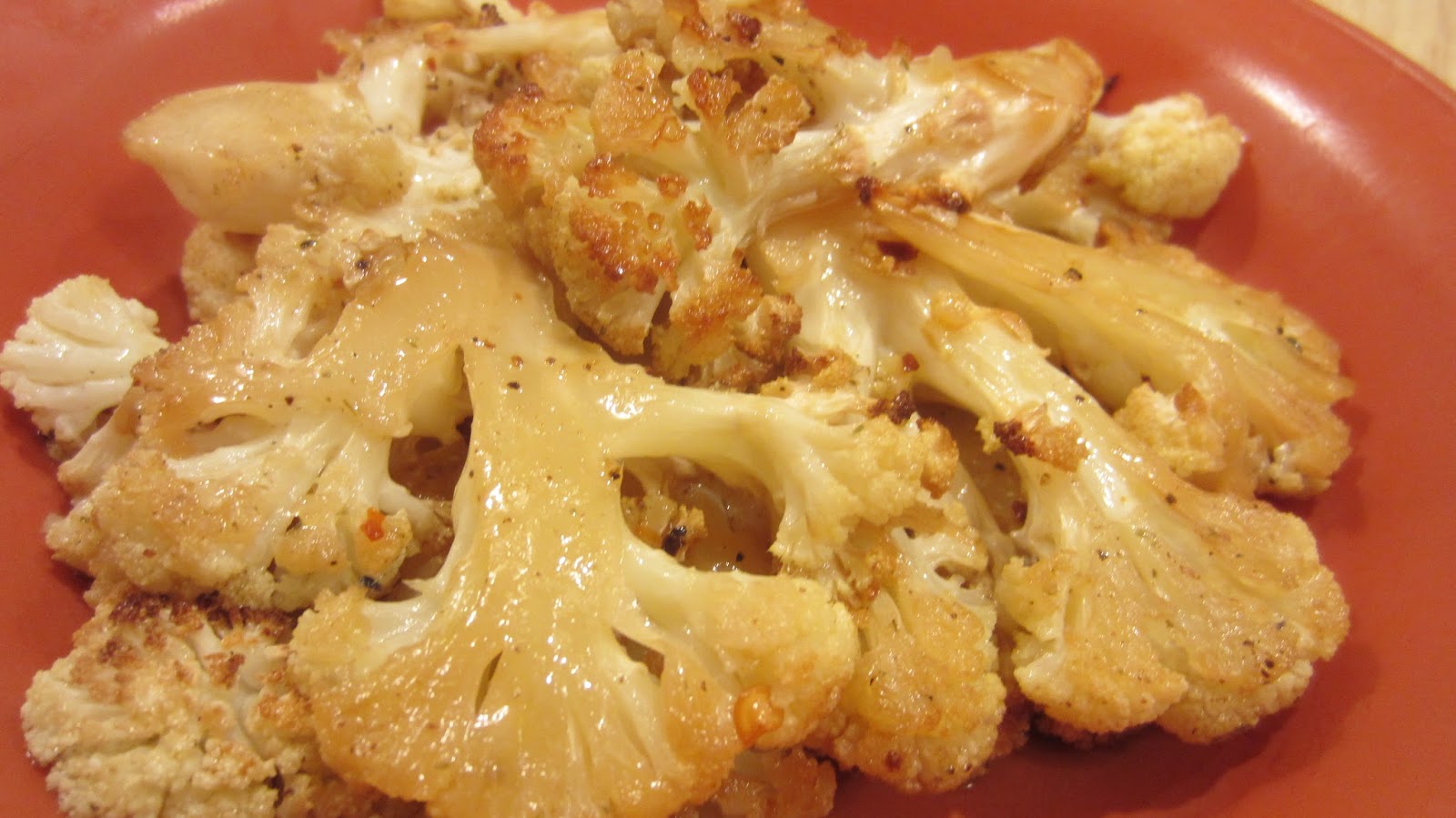
Honey-Roasted Cauliflower


Looking for a different side dish for Thanksgiving?  This honey-roasted cauliflower may be your answer! 

Preheat the oven to 400 degrees and line a large baking sheet with aluminum foil.  Slice a whole cauliflower head into 1/4 inch slices.  There will be some bits of cauliflower that don't stay in tact--that's fine.   Tossed the slices (and extra bits)  with about 3 tablespoons of olive oil so that the slices are evenly coated and place them on the prepared baking sheet.  Sprinkle with about 1/2 teaspoon kosher salt and freshly-cracked pepper.  Drizzle the whole shebang with about 3-4 tablespoons of honey.  Roast for about 20 minutes, then pull out, turn the slices over.  Return to the oven for about 20 minutes more.

You can embellish with some red pepper flakes if you like your roasted cauliflower on the spicy side--or add some chopped garlic half way through the roasting to ramp up the flavor.  This is great hot out of the oven, but is also nice at room temperature, too.   I had these with some macaroni and cheese for a mid-week dinner and couldn't have been happier!


Friday, September 13, 2013

Pickled Cauliflower in Honey & Beet Brine


These unusual pickles not only have a great crunchy pickle taste, they also look lovely in the pantry! I will, however, note that out of the jar, the cauliflower florets are more pastel-pink than the bright purple-pink they appear in the jar.

This recipe, with some modifications, came from Andrea Chesman's book Pickled Pantry (Storey Publishing, 2012), which I borrowed from the library and have really been enjoying.  I particularly like the way that she describes the flavors of the pickles and the helpful recipes at the end for using and cooking with pickles. The recipes also include small batches (1-quart) as well as recipes for fermenting.   When we crack open the first jar, I'll report back on the taste.

Looking for more pickle recipes to try?
Check out previous posts for:
honey pickled carrots
cherry tomatoes in honey brine
pickled garlic scapes

Pickled Cauliflower in Honey & Beet Brine

This recipe makes four pints (or two quarts)

2 small-medium beets well scrubbed, chopped (you don't have to be too meticulous here because the beets will eventually get strained out)
2 2/3 cups distilled white vinegar
2 2/3 cups water
3 tablespoons honey
4 teaspoons pickling salt 
2 teaspoons caraway seeds
1 teaspoon celery seeds
One large (approximately 6-8 inches)--around 6 cups--of cauliflower florets

In a saucepan, heat the beets, vinegar, water, honey and salt just to a boil and then simmer for five minutes.  While the vinegar heats, pack the cauliflower into sterilized wide mouth canning jars. (To sterilize, I place in a 225 degree oven for 20 minutes--consult any canning resource for guides about this.)  To each jar, add 1/2 teaspoon caraway seeds and 1/4 teaspoon celery seeds.  Strain the beets out of the vinegar brine and pour the hot brine over the cauliflower, leaving 1/2 inch head space.  Remove any air bubbles and then seal with lids.  Place in a boiling water bath (water should cover the sealed jars by 2 inches).  Bring the water back to a gentle boil and begin timing--the jars should be in the bath for 15 minutes.  Remove, cool completely, check that the jars have sealed and wait 6 weeks for the flavors to develop.  (Any unsealed jars should be refrigerated.)


Saturday, January 21, 2012

Winter Bees

Western PA was hit with our first big snow storm of the winter last night.  The apiary is buried under about six inches of snow.  We often get asked how bees get through the winter, especially since honey bees don't sleep, they don't hibernate and they don't fly around when the temperatures are below 40 degrees.  
So, what do bees do in the winter time?  They cluster. 
As winter’s cold sets in, the worker bees tightly cluster around their queen and vibrate—shiver, really.   Their collective shivering keeps the internal temperature of the hive at a cozy 95 degrees, nearly the same temperature as a normal human body.  The bees move in and out of the cluster so no individual freezes.  They all share the burden.  As the winter progresses, the cluster moves through the hive, munching on the stores of honey they worked so hard to save through the spring, summer and fall. 
A typical colony needs about 60 pounds of honey at minimum to survive the winter.  An experienced beekeeper can lift up a hive from the back to judge the weight and tell if the bees will have enough to eat.  Anything over about 80 pounds is surplus honey that the beekeeper can safely take for herself.  
The job of the winter worker bee is to feed the queen and get the colony through these next frigid months. In the spring and summer, a worker bee will live no more than six weeks.  She literally works herself to death tending to the colony and foraging for nectar and pollen to feed their young and store for the winter.  The winter worker bee, though, can live as long as four to six months—the kind of time a colony needs to survive the vagaries of a Pittsburgh winter.  On a rare winter day when the temperature inches over 40, the bees will break their cluster and take what are called “cleansing flights”; they leave the hive to relieve themselves.  Mostly, though, they shiver and eat their way through winter.  Kind of like the rest of us.

Here's a recipe for Creamy Curry Cauliflower Soup, perfect for a winter's day.  Adapted from a Vegetarian Times recipe (a great source for soup recipes!). All the creaminess comes from the vegetables--it doesn't have even a splash of milk.  The honey is mostly a spice or flavoring here. Serve with bread or corn muffins. And don't forget to cluster!


2 tablespoons olive oil 1 small onion, chopped
1/2 teaspoon kosher salt
1 medium tart apple, peeled, cored and chopped (about 1 cup)
1 tablespoon curry powder
1 clove of garlic
1 large head cauliflower, chopped (about 6 cups)
4 cups low-sodium vegetable broth (or, if you're not vegetarian, chicken broth)
1 - 2 tablespoons honey, plus more for a drizzling.
1 teaspoon vinegar (cider, rice wine, white wine)
salt and pepper to taste

Saute onion in olive oil until soft and golden in a stock pan. Add apples, curry powder and garlic and cook until curry powder is fragrant and apples soften a bit.  Add cauliflower and broth, bring just to a boil.  Lower heat, cover and simmer for about 20 minutes or until the cauliflower and apple are very soft.  Let the soup sit for about 20 minutes for the flavors to meld.  Blend until smooth. Stir in the honey and vinegar.  Taste and add salt and pepper as needed.

Friday, December 30, 2011

Cauliflower Salad and Delicious Honey Oat Quick Bread

If you've been indulging a bit much over the holidays, here a few healthier dishes to help kick-start the new year!  The cauliflower salad offers a cheery burst of colors and the honey oat quick bread is just slightly sweet--it almost tastes like a yeast bread.  Together they make a nice, light meal.

Honey Cauliflower Chopped Salad for a Crowd
1 small head cauliflower, broken into small (1/4-1/2 inch pieces)
1 red pepper, in 1/4-1/2 inch dice
1 green pepper, in a 1/4-1/2 inch dice
1/2 cup diced red onion
1 cup black olives, sliced
Dressing:
1/2 cup olive oil
4 tablespoons lemon juice (freshly squeezed is nice)
1 teaspoon grated lemon rind (optional)
3 tablespoons white wine vinegar (could substitute red wine vinegar or cider vinegar)
1/4-1/2 cup honey (I used amber, summer honey; spring honey would also be good)
1 teaspoon kosher salt
1/2 teaspoon freshly grated black pepper

Combine the vegetables, onion and olives in a bowl.  Place the dressing ingredients in a jar and shake well to combine.  (Start with 1/4 cup honey.)  Pour the dressing over the vegetables and toss well.  Refrigerate for about an hour to let the flavors meld.  Taste and add more honey (or salt and pepper).  Can serve cold or at room temperature. Serves 8-10.

Honey Oat Quick Bread
This is adapted from an Eating Well recipe, which appeared in the January/February 2007 issue.  Check out the reviews at the link above.

2 tablespoons plus 1 cup old-fashioned oats
1 1/3 cups whole wheat flour
1 cup all-purpose flour
2 1/4 teaspoons baking powder
1/4 teaspoon baking soda
1 1/4 teaspoon coarse salt
8 ounces yogurt (low fat is fine)
1 large egg
1/4 cup canola oil
1/4 cup honey (I used amber summer honey but fall honey would be lovely, too!)
3/4 cup low or nonfat milk

Preheat oven to 375 degrees with rack in the middle position.  Lightly oil 9 by 5 inch loaf pan.  Sprinkle 1 tablespoon oats in pan, covering bottom and, as best you can, sides.  Whisk the flours, baking powder, soda and salt together in a large bowl.  In a separate bowl, beat 1 cup of the oats, yogurt, egg, oil and honey, mixing well.  Stir in the milk.  Stir this into the flour, gently mixing until combined--taking care not to over-mix.  You want the batter to be combined so that everything is moist, but don't beat it.  Pour batter into prepared pan and smooth to the edges.  Sprinkle the remaining tablespoon of oats on the top.  Bake for about 40 to 50 minutes until the loaf is very brown.  The top will crack. To test that it's done, insert a toothpick in the crack--if it comes out clean, it's ready!  Cool on a wire rack for about 15 minutes then loosen with a bread knife.  This is great toasted the next day! Makes 1 loaf--or about 12 1-inch slices.