Showing posts with label tomatoes. Show all posts

Saturday, April 9, 2016

Tomato Soup with Grilled Cheese & Sauerkraut Sandwiches

Although it's well past the vernal equinox here, it hasn't really felt like spring.  I mean: SNOW! Chilly days call for comfort food and that's what these recipes offer.  The tomato soup is adapted from Jennifer Steinhauer and appears on Cooking New York Times.  That recipe calls for a whopping 1/2 pound of butter and 3/4ths cup half-and-half.  I cut the recipe down a bit and used 2% milk instead.  We also added some chopped marjoram, which despite the chilly temps, is burgeoning in the garden right now.  This is a very comforting soup that is not unlike the kind you might have had from a can--only better (and likely better for you, too!).

What better to go with tomato soup than grilled cheese sandwiches?  We glammed these up a bit by adding sauerkraut that we made from cabbages last year. We followed Sandor Katz's directions for making sauerkraut with great results.  So these are basically Rubens without the "ru."  Don't know why I haven't thought to add sauerkraut to grilled cheese before: it's amazing!  

Tomato Soup
makes about 4 1-cup servings

4 tablespoons (1/8 pound) butter
1 large onion, diced
2 tablespoons flour
1 quart tomatoes--whole or crushed (or 1 28-ounce can)
1/2 to 3/4ths cup vegetable broth
2 tablespoons honey, plus a bit more to drizzle on top if you'd like
1 teaspoon salt (more or less, depending on how salty your broth is)
1/2 teaspoon ground black pepper
1/3 cup milk (1%, 2% or whole--coconut milk might also be nice!)
1 tablespoon fresh marjoram (or oregano), minced, plus a bit more sprinkling on top if you'd like.

In a large sauce pan, melt butter over medium low heat.  Add diced onions and cook, stirring often until they are very soft (and sweet).  Do not let the onions brown. When onions are very soft, sprinkle the flour over them and cook for a few minutes (2 or 3 at most)--stirring and, again, not letting the onions or the flour brown.  Crush the tomatoes if you're using whole ones. Add tomatoes, broth, honey, salt and pepper to the pot and stir well  Raise the heat and bring just to a bubble, then turn on very low and simmer for about 20-30 minutes, stirring very regularly so the bottom doesn't burn.

Remove from heat.  Stir in the minced marjoram and let cool a bit. Puree all in a blender. Return the pureed soup back in the pot and reheat if needed.  Stir in milk. 


Grilled Cheese and Sauerkraut Sandwiches
Makes 2 sandwiches

4 slices rye bread
1-2 ounces Swiss cheese, sliced about 1/4 inch thick (cheddar or other cheeses would also be good!)
1/2 cup sauerkraut, rinsed
1/2 tablespoon butter

Sauce:
2 tablespoons mayonnaise
1 teaspoon ketchup
1/2 teaspoon capers, diced
1 teaspoon dill pickle relish or diced dill pickle.  (You could use sweet relish instead, but if you do, skip the honey!)
1 teaspoon honey

Lightly butter two slices of bread and place in a frying pan or griddle on medium low heat.  Divide the cheese slices between the two slices of bread.  Top with the sauerkraut--about 1/4 cup for each sandwich.

Stir all of the ingredients for the sauce together, mixing well.  Spread about one teaspoon of sauce on each of the remaining slices of bread and place them sauce-side down on the sandwiches in the pan. Butter the outside of those bread slices.  Check to see if first slices are well-browned on the bottom (and the cheese is melted) and if so, flip over and cook for a few minutes more.  Slice the sandwiches in half and serve with the tomato soup.


Sunday, October 11, 2015

Amazing Greek Beans with Honey and Dill

This recipe for Greek baked beans with honey and dill is adapted from a Martha Rose Shulman recipe at the New York Times.  She offers a range of health-conscious recipes that are always big on flavor.  These are unlike any baked beans I've ever eaten.  The honey, vinegar and dill in the recipe combine with the beans and tomatoes to make a rich, hearty dish that goes great with some chewy bread.  The beans are baked for an hour and 30 minutes in the oven, which makes them quite creamy, not mushy.  It's a meal in itself, but this also makes a good side dish, too!  Instead of diced canned tomatoes that Shulman's recipe calls for, I used tomatoes that Robert cooked down into a sauce and canned. the result, I think, is a more tomato-y dish. Our dill had run its course in the garden, so all I had dried.  It did the trick, though I'd imagine fresh dill would be heavenly.  Shulman's recipe doesn't call for Parmesan cheese, and it's possible this addition makes them decidedly less Greek then.  We like the salty meatiness the cheese adds.

Greek Baked Beans with Honey and Dill
1 pound great northern beans (or other white bean), soaked in a large bowl of water overnight (or see recipe for quick soak method)
about 1/4 cup olive oil
1 medium red or other sweet onion, chopped
6 cups stewed tomatoes (or 1 28-ounce can chopped tomatoes)
1 bay leaf
3 tablespoons honey
2 tablespoons tomato paste (could skip if you use the stewed tomatoes)
1/4 cup red wine vinegar
salt
pepper
1 tablespoon dried dill (or to taste)
about 1/2 cup grated Parmesan cheese

Quick soak bean prep: If you forgot to soak beans the night before like I often do, you can place them in the pot and cover with several inches of water.  Bring to a boil and boil for about 3 or 4 minutes, then turn off the pot, cover, and let the beans soak in the hot water for an hour. Drain.
 
Place the soaked beans in a dutch oven or other oven safe pot. Add water to cover three inches above the beans.  Bring to a boil and simmer for 30 minutes.

While beans cook, saute the onion in a few tablespoons of olive oil (not the whole 1/4 cup!) until they begin to caramelize. Heat the oven to 375 degrees.  When the beans are ready, drain them and return them to the pot.  Add the remaining olive oil, onions, tomatoes, bay leaf and honey.  If using canned tomatoes, add water enough to cover the beans.  Stir everything together and bring to a simmer.  Cover the pot and place it in the oven. Bake for an hour, stirring regularly and checking to see if they need more water.  Remove from the oven and stir in the vinegar, tomato paste if using, and salt & pepper. Cover and return to the oven for about 30 minutes more until the beans are tender but not mushy.  Remove from the oven, fish out the bay leaf and stir in the dill.  Let the beans sit covered for about 15 minutes.  To serve, top the beans with a few tablespoons of grated Parmesan cheese per serving and enjoy with some crusty bread.


Friday, August 16, 2013

Fresh Tomatoes! Two Recipes!

Tomato Sandwich with Sourdough Cornmeal Bread
The tomatoes in our garden took their time ripening this year, but we now have baskets full to enjoy before the late blight knocks them out for good. (A friend and colleague recommends using a copper sulfate to prevent blight, which we'll try next year!)  My favorite way to eat fresh tomatoes is as a simple tomato sandwich.  Brings back memories of watching my Grandmother Wood prepare tomato sandwiches:   thin slices of  Pepperidge Farm white sandwich bread slathered with mayonnaise, topped with thickly sliced tomatoes and an ungodly amount of salt.  I'm almost positive Grandma peeled the tomatoes since she peeled everything (even celery).  Made a mean BLT, too!

The first recipe here is for Sourdough Cornmeal Bread, which isn't as delicate as Pepperidge Farm white bread, but makes a great sandwich bread with a nice, nutty crunch.  Thinly sliced, it's perfect for tomato sandwiches.  Our dear friends (and recent visitors) Rebecca, Tom and the amazing going-on-3 Eleanor enjoyed some of this bread toasted with honey during their visit.  This recipe's for you, Rebecca! :)

The other recipe for fresh tomato slices is adapted from a recipe in the Pittsburgh Post-Gazette: Brenda Waters's Grandmother's Special Sliced Tomatoes. (Grandmas really seem to know their way around tomatoes!)  I hesitate to add anything at all to a nice, fresh tomato slice, but this recipe was too intriguing to pass up--and it's delicious.  A friend who doesn't even like honey (yes we actually have friends who don't like honey!) liked these tomatoes.  Read on for the recipes!

Sourdough Cornmeal Bread for tomato sandwiches
Sourdough Cornmeal Bread
This recipe is adapted from Sunset's A Cookbook of Breads (1974), which I must have picked up at a thrift store ages ago. It requires sourdough starter, which isn't hard to make--just takes about a 3 to 5 day commitment.  Need a sourdough starter recipe? Here are step-by-step instructions from King Arthur flour. Also check out this quick starter recipe from a previous blog post for sourdough English muffins.

1 teaspoon (1/2 package) quick rise yeast
1/2 cup sourdough starter
2 tablespoons canola oil
2 tablespoons honey
1 teaspoon salt
1 cup very warm water
1 cup cornmeal (plus extra for sprinkling on dough before baking)
1 cup whole wheat flour
1-2 cups bread flour (you could use all-purpose flour if you want--and could also skip the whole wheat flour.  You'll get a slightly less dense loaf if you do).

Combine the yeast, starter, canola oil, honey, salt, water, cornmeal and whole wheat in a mixing bowl.  Using a wooden spoon (or the dough hook of a mixer), combine well.  Add the white flour, about a 1/2 cup at a time until a stiff dough forms. Knead the dough until it's smooth--by hand (on a floured board) for about 10 minutes or by mixer for about 5.  (Using a mixer will likely cut down on the amount of flour you use overall, making the dough a bit lighter.)

Lightly coat a large bowl with oil and place dough in the bowl, oil top and cover with plastic wrap and then a kitchen towel (not terry cloth).  Let rise for about 1 1/2 hours in a warm spot until it doubles in bulk.  Remove from the bowl, folding the dough in on itself a few times and form into a round ball (or boule).  Place a sheet of parchment paper on a flat-sided cookie sheet and sprinkle it with a little corn meal. Place the dough on the sheet and sprinkle a little cornmeal on top.  Cover with the plastic wrap and kitchen towel and let rise for another 1 1/2 hours.

Preheat the oven to 375 degrees.  If you have a baking stone, put it in the oven on a middle rack to preheat as well.  When the oven is preheated and the dough has risen, take a serrated knife and make a few slashes in the top (each about 1/4-1/2 inch deep).  Slide the dough (with parchment) from the cookie sheet onto the baking stone (if you're using a stone) or just put the cookie sheet with dough into the oven.  Bake for about 30 to 35 minutes.  The crust should be nicely browned--almost honey colored.  The crust will be crunchy when first baked, but will soften once it cools. (You can crisp the crust by reheating in the oven if you'd like). You should probably wait until it cools completely to slice it, but I've never been able to wait that long!

Sliced tomatoes with vinegar honey dressing

Sliced Tomatoes with Vinegar and Honey
4 large fresh tomatoes, peeled
2 tablespoon cider vinegar
3 tablespoons honey
kosher salt
Core and slice the tomatoes in 1/2 inch slices.  Place on a plate or platter with a lip (so that the dressing doesn't run off!). Stir the vinegar and honey together in a small microwaveable bowl. Heat for 15 seconds, just to warm the mixture and ensure that it's well combined.  Sprinkle the tomatoes with salt and drizzle the vinegar-honey mixture on top.  Serve with the bread to soak up all of those delicious juices!
Serves 4


Monday, September 10, 2012

Cherry Tomatoes in Honey Brine


As I lamented in a previous post, we lost all of our tomato plants to the destructive late blight.  I was particularly sad to say good-bye to two vibrant yellow cherry tomato plants.  We'd been enjoying these sweet-like-candy tomatoes throughout August.  This recipe for brined cherry tomatoes gave me a chance to use some of the not-quite-ripe tomatoes still left on the vines.  In fact, this recipe requires not-quite-ripe tomatoes.  Ripe tomatoes will get too mushy in the brine, but those that haven't ripened fully keep a nice crunch.  This is, admittedly, a recipe for adventuresome cooks (and eaters). It's very simple to do, but requires patience (time for the tomatoes to soak in the brine) and the result is crispy, salty, piquant pickled tomatoes--a few go a long way.  They'd be great as part of an antipasto platter, or served with cheese and crackers, or gracing the side of grilled cheese sandwich or added to a leaf lettuce salad.  Use them where ever you'd use a dill pickle.

Cherry Tomatoes in Honey Brine
1 1/4 pounds half-ripe cherry tomatoes
6 dill heads (or 2 tablespoons dill seeds and about 6 sprigs of fresh dill)
1/4 cup fresh horseradish, grated (you can used bottled horseradish instead--just be sure it's not a horseradish sauce with cream)
3 sprigs of fresh parsley
1/2 fresh hot pepper, seeded (I used a Hungarian hot) and cut in a few pieces
2 tablespoons pickling salt (or UNiodized salt)
2-3 tablespoons honey
1 quart of water

In a jar that will hold two quarts, layer the tomatoes interspersed with the herbs, horseradish and pepper pieces.  Dissolve the salt and honey in the water and pour over the tomatoes in the jar.  Be sure the tomatoes are submerged in the brine--I filled a small zipper-lock bag with some water and placed it on top of the tomatoes to keep them under the brine.  If your jar has a large opening, you could put a plate or saucer on top.  Let the tomatoes ferment in the brine, unrefrigerated, for a week.  When a week is up, cover them tightly and place in the refrigerator to develop more fully.  You can taste them throughout the process--and you might enjoy the delicate flavor they begin to develop after about a day.  They should keep in the fridge for at least a month.


Saturday, September 8, 2012

Sweetness and Blight: Honey Roasted Tomatoes

Slightly ripe plum tomatoes, ready for roasting
We were dismayed to head to the garden last week to find that our tomatoes were hit with the dreaded (and highly contagious) late blight, which destroyed the plants in a day. This is the pathogen that was responsible for the Irish potato famine--it affects both tomatoes and potatoes.  The spores of the pathogen, Phytopthora infestans, readily spread by wind and rain, so the plants must be destroyed immediately to be sure they don't spread the infection to a neighbor's crop. There is nothing to do but pull up the plants, burn them and cry.  Well, actually, there is one more thing to do:  roast the tomatoes that you can save.

We harvested the (mostly green) tomatoes that weren't yet infected and carted them inside to ripen as best they could.  These would not be the season's most delectable tomatoes, that's for sure.  After a week in a basket under some newspapers, the tomatoes turned rosy. To pump up their sweetness and flavor, I roasted them with honey, garlic and thyme--a simple but delicious way to deal with less-than-perfectly ripened tomatoes, and a nice alternative for processing tomatoes if you have a bumper crop.  You can honey roast any kind of tomato--plum, globe, cherry--and they make a great lunch meal with some crusty bread, a unique side dish, or can be pureed into a nice tomato sauce for pasta. The process is simple, and the results are good enough that these tasty tomatoes can even provide some solace for the heart break of late blight.

HONEY-ROASTED TOMATOES

Preheat the oven to 400 degrees.

Plum tomatoes after the roast
Slice tomatoes in half (larger tomatoes can be quartered if you like) and remove the seeds. Line a cookie sheet with a lip or a roasting pan with aluminum foil and lightly grease with olive oil.   Place tomatoes in the pan, skin-side down.  It's fine to crowd the pan, but there should be only one layer of tomatoes.  Tuck unpeeled cloves of garlic in and among the tomatoes (optional but very nice, especially if you plan to make pasta sauce with this)--we like garlic, so I usually use a whole head.  Tuck sprigs of fresh thyme in and among the tomatoes and garlic. Sprinkle the tomatoes generously with olive oil and then slightly less generously with honey.  Make sure every tomato has splashes of oil and drizzles of honey.  Sprinkle about 1 or 1 1/2 teaspoons of kosher salt all over.  Roast for anywhere from 30 to 60 minutes depending on what kind of tomatoes you're roasting (cherry tomatoes will take much less time) and how caramelized you'd like them to be.  I roasted a bunch of plum tomatoes and Paul Robeson heirlooms (see photos below) for 60 minutes.  You can serve the tomatoes as is, taking care to peel the roasted garlic first, and offering lots of crusty bread on the side to sop up the juices.  Or, you can let them cool, remove the skins and whirl them and the (peeled) garlic in a blender or food processor for roasted pasta sauce.  You can also freeze the tomatoes once they cool or freeze the tomato sauce.

A NOTE ABOUT AMOUNTS:  You can roast as many or as few tomatoes as you have.  If you're roasting globe tomatoes, figure on about 1/2 per person if you're serving them as a side dish.  You might need 2 or 3 paste tomatoes (which make the best roasted tomato sauce, too) per person.  Cherry tomatoes--well, maybe 10 per person?  How hungry are you and your peeps? :)


Paul Robeson heirloom tomatoes ready for roasting


Paul Robeson heirlooms after the roast-a bit juicier than the plums!

Tuesday, June 5, 2012

Polenta Stuffed Chard with Quick Honey Tomato Sauce

The inspirations for this bubbly dish of goodness came from a few sources.  The first is a recipe for polenta stuffed chard by Gretchen McKay published in the Pittsburgh Post-Gazette.  The second is a quick pasta sauce recipe in the Best Recipes Cookbook by America's Test Kitchens.  And finally, our recent honey extraction, the big leaves of Swiss chard growing in the garden, and the bumper crop of garlic scapes inspired me to fiddle with both of these recipes.  Though the dish requires a few steps and a little advanced planning (the polenta needs some time to set up), it's not that complicated--and it's delicious!

Truth be told:  you could make this dish with any nice tomato sauce recipe you have--you don't need to have a drop of honey in the house (or garlic scapes for that matter; just substitute some minced garlic cloves).  But this is a blog about cooking with honey, so there's honey in this dish!

For the polenta:
3 cups chicken broth (or vegetable broth, or even water if you'd prefer--though you may need a bit more salt)
1 cup of polenta (or coarsely ground corn meal)
2 tablespoons butter
1/4 cup finely grated Parmesan cheese
pinch of salt

Lightly oil a 4x10 glass dish (or 8x8).  Bring the broth (or water) to a rolling boil in a sauce pan.  Slowly whisk in the polenta, stirring constantly. Lower the heat so that the polenta barely plops an occasional bubble. Cook for about 20 minutes, stirring frequently to be sure the polenta does not stick to the bottom of the pan.  When the polenta is very thick, remove from the heat, stir in the butter and the Parmesan, blending well.  Pour the polenta into the prepared glass dish and cool for at least 15 minutes.  Place in the refrigerator to set up for about 30 minutes.  If you're making the polenta well in advance, cover it. It can sit overnight.  When ready to make the rolls, cut the polenta into 12 pieces, about 2x3 inches.

While the polenta is setting up, make the tomato sauce:


For the honey tomato sauce:
3 tablespoons olive oil
4-6 garlic scapes (about 4 inches long), chopped
1 28-ounce can of whole tomatoes, chopped
1/8 cup honey
1 tablespoon vodka
4-6 good sized basil leaves, minced
pinch of red pepper flakes (optional)
salt to taste.

Heat a frying pan over medium high heat and add the olive oil, letting it heat for about 30 seconds or so.  Add the minced garlic scapes with a pinch of salt and saute for about 1-2 minutes, being careful not to let the scapes brown.


Add the tomatoes, stirring to distribute and bring them to a gentle simmer.  Cook for about 10 minutes so that they become thick and reduce a bit.


Stir in the honey, vodka and basil and cook for a few minutes more then remove from heat.  Taste and check seasoning, adding some salt and pepper (and if you'd like, red pepper flakes).

Prepare the Swiss Chard: 
You'll need 12 large Swiss chard leaves. Wash the leaves and cut the thickest part of the stem out, trying to keep them intact if you can. Put the leaves in a bowl and pour boiling water over to wilt them.  Let them sit in the water for about 6 minutes and then drain in a colander.

For the rolls:
12 wilted Swiss chard leaves (see above)
12 pieces of polenta, about 2x3 inches long
6 1/2 inch slices of mozzarella cheese, cut in half
1/2 cup finely grated Parmesan cheese
Quick Honey Tomato Sauce

Preheat the oven to 350 degrees and cover the bottom of an 9x13 glass baking dish with some of the Quick Honey Tomato Sauce. (I used two 8x8 glass dishes.)

Place a kitchen towel (not terry cloth) on the counter and put one wilted Swiss chard leaf on the towel, blotting it a bit to sop up any water that's clinging.  Place one piece of polenta on the edge of the leaves and top with one piece of mozzarella.  Top with about a tablespoon or so of sauce.  


Fold the leaf over the polenta and cheese like you're making a burrito: fold the side closest to you up first then fold over the two edges.  Roll until the leaf fully covers the polenta, cheese and sauce.


Place the roll in the prepared pan and continue making the rest of the rolls until you fill the pan.  Top the rolls with the remaining tomato sauce then top it all with Parmesan cheese.


Bake at 350 for about 30 minutes until the dish is hot and bubbly. Let sit for about 10 minutes to cool then serve.  This recipe makes 12 rolls, or enough for 6 people (without seconds!). 


Friday, May 18, 2012

Honey and Infants (+ healthy salads for new parents!)

My niece and her husband just had their second child (a boy!) and I've been making some healthy meals to keep them well fed while they settle in with their new one.  Preparing food for the newly expanded family and an email exchange with our friend Jarrett (also a new papa and a big honey fan!) made me look more closely into the reasons that infants should not be fed honey.  My niece is breastfeeding and I wanted to be sure that  any honey I used in the meals I'm making wouldn't cause any trouble.  So, first things first: I'm not a doctor and I'm not dispensing medical advice here, but this WebMD page suggests that if eaten in "food amounts," then honey is fine for a breastfeeding mom to eat.

Why shouldn't infants (under 1 year old) have honey?  An in-depth 2002 article from American Family Physician offers a wonderful overview of this issue, which is worth a read if you're a new (or old!) parent  with questions.  The reason that raw unpateurized honey should not be fed to infants under 1 year old is that it may contain botulism spores that a baby's young intestines are not yet equipped to combat.  The American Family Physician article also includes this surprising information:  though infant botulism is rare worldwide, most diagnosed cases are in the U.S.  The article attributes this to more awareness in the US (not that there are more spores in the US).

Looking for less in-depth but reliable info about infant botulism and honey?  Here are two great sources:   the Mayo Clinic website and the U.S. National Library of Medicine's Pub-Med Health webpage.   If you want to do your own searching for more information about this, try "infant botulism and honey" as search terms.

Two Healthy Salads for New Parents (both with lovely lime dressing!)


Quinoa, Red Pepper & Black Bean Salad with Honey-Lime Vinaigrette
Quinoa (pronounced KEEN-wah) is a seed that growing in popularity primarily because it's a great source of protein and easy to make.  The Food and Agriculture Organization of the United Nations compares the nutritional quality of quinoa to dried whole milk.  You can find it now in many grocery stores near the rice section.  Most of the quinoa we get in the US is grown in Bolivia.  As with just about every food option, the popularity of quinoa has advantages and disadvantages.  Want to read more?  Check out "The Paradoxes of Quinoa" from the Alpha Galileo Foundation.)

1 cup quinoa
2 cups cooked black beans (or 1 can, drained)
1 red bell pepper, diced in 1/4- inch dice
2 scallions, sliced in 1/8-inch circles (include some of the green part)
1-2 tablespoons honey
juice of one lime
1 tablespoon red wine vinegar
2-3 tablespoons vegetable oil
salt and pepper to taste

Place quinoa in sauce pan with 2 cups water, cover and bring to a boil. Turn down heat and simmer for about 20 or until all the water is absorbed.  Cool.  Place cooled quinoa in a large bowl.  Add the peppers, beans and scallions.  In a small jar, combine the honey, lime juice, vinegar and vegetable oil and shake to emulsify.  Pour over salad and mix well.  Taste and add salt and pepper as needed.  Refrigerate until ready to serve.

This delicious corn salad comes from Jarrett who claims they're making it at least twice a week!

Grilled Corn, Avocado and Tomato Salad with Honey-Lime Dressing
2 ears fresh sweet corn, grilled and scraped from cob (remove husks and grill over medium heat for about 10 minutes, turning--the corn should have some brown spots on it and be tender, but not mushy)
1 pint grape tomatoes, sliced in half
1 avocado, diced in
2 ears fresh corn
2 tablespoons fresh cilantro
Gently toss all of the above in a bowl

Honey Lime Dressing
juice of one lime
3 tablespoons vegetable oil
1 tablespoon honey
1 clove garlic, minced
salt and pepper to taste
dash of cayenne (optional--I'd leave this out if making for a new breastfeeding mom)
Place dressing ingredients in a jar and shake vigorously to combine.  Pour over salad and gently toss.  Let sit for 10-15 minutes so flavors meld and deepen.  Enjoy (and thanks, Jarrett!)


Friday, December 23, 2011

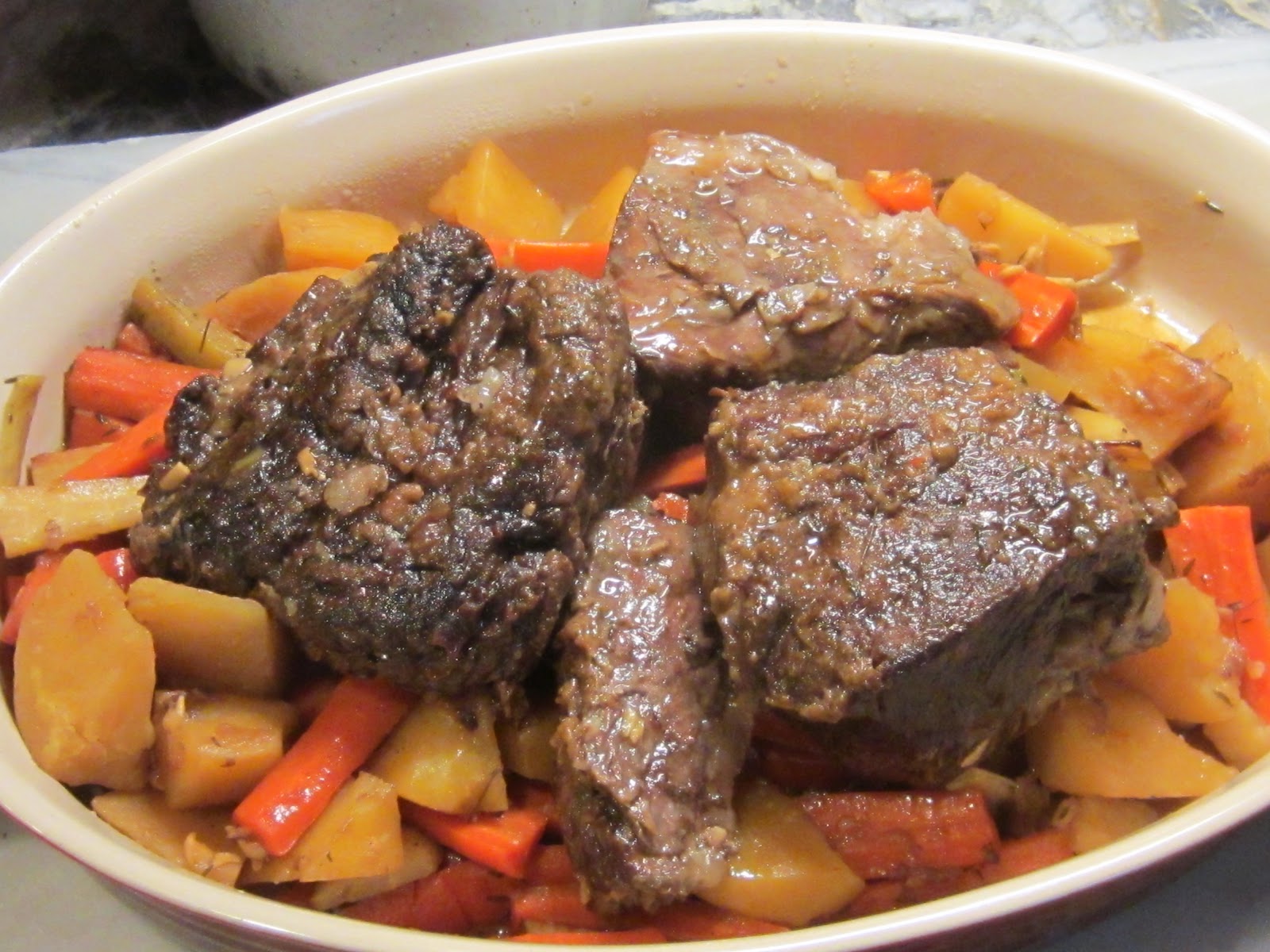
Honey Pot Roast for Christmas (Eve) Dinner

This is pull-apart-with-a-fork tender pot roast, lightly sweetened with honey.  We'll be serving it for Christmas Eve dinner this year.  We got the chuck roast from McElhaney Family Farm in Hookstown--a wonderful source for locally raised beef!

I adapted this from the National Honey Board's recipe for Irish Honey Pot Roast.  We just fiddled a bit with it! :)  I made it a day ahead and will let the meat cool in its juices, so to speak.  I'll reheat it in a slow cooker on low for a few hours before serving.


1 teaspoon salt
1 teaspoon pepper
4 to 5 lb chuck roast
1/2 cup flour
2 tablespoons olive oil
2 cups beef broth
1/2 cup honey (I used summer amber honey)
1 cup apple cider (you could substitute ale)
4 cloves garlic, minced
1 tablespoon fresh thyme, minced
2 cups carrots, peeled and cut in in 2 x 1/2 inch pieces (approx.)
2 cups parsnips, peeled and cut like the carrots
2 cups leeks, well-cleaned and cut like the carrots
2 cups potatoes, peeled and cut in 2 inch chunks
Preheat oven to 375 degrees.  Salt and pepper the meat, coating thoroughly.  Dredge the meat in the flour.  Heat the oil in a Dutch oven over medium high flame.  Sear the meat on all sides--letting brown very well on the two largest sides (about 5 minutes each side).  Gently heat the broth, cider and honey and stir well to thoroughly combine.  Add this to the Dutch oven along with the garlic and thyme.  Seal with aluminum foil and place the lid on top.  Roast for 1 1/2 hours.  Add the vegetables (they'll pile high on top--but not to worry, they'll cook down).  Seal again with foil, add the top and roast for another hour or so until the vegetables are soft and the meat is tender.  At this point, you can remove the vegetables to a serving dish and place the meat on top, spooning the broth over all.  If you'd like a thicker gravy, you can place the Dutch oven on the stove and bring it to a boil.  Combine about 1/4 cup flour, a bit of salt and pepper and 1/2 cup cold water in a jar with a lid and shake well.  Add the flour mixture to the boiling broth and stir until the gravy thickens.  Taste for seasoning and either pour the gravy over the meat and vegetables or serve on the side.

Make ahead:  Once the meat and vegetables have cooked, remove them from the Dutch oven, placing the meat in a slow cooker with the broth and the vegetables in another dish.  Cool and then refrigerate overnight.  About three hours before serving, remove from the refrigerator and bring to room temperature.  Place the meat in the slow cooker and heat on low about two hours.  Add the vegetables about hour before serving (or cover with foil and bake at 350 degrees for about 30 minutes until heated through).  This recipe serves between 8 and 10 people.

The National Board's recipe notes the whole thing can be made in a slow cooker:  Place the vegetables in the cooker, brown the roast and place it on top of the vegetables.  Cover and cook on low for 8 to 10 hours.

Sunday, September 11, 2011

Honey-as-Seasoning for Fall Harvest Bounty!

Back-to-school means were slacking on our blog posts, folks.  My apologies to those who have a hankering for honey recipes and need more ideas!

In these two recipes, the honey acts almost like a seasoning, rather than a main ingredient.

Peaches, Figs, Maytag Blue Cheese & Honey
Our dear friends, Jeff and Laurie, made time in the midst of canning tomatoes to feed me dinner last week. They asked me to bring a seasonal fruit side dish or dessert, and this is what I made.  I would work as a nice "first course," side dish, or--as we used it--dessert. It received rave reviews from Jeff, Laurie and bonus guests, Beth and Steve, who stopped by on their way home from a trip to Chicago.

Two, large-ish fresh peaches, peeled. (McConnell's Farm peaches are amazing!)
Four fresh figs, washed
4 oz Maytag blue cheese, crumbled
1/4 cup almonds, toasted and chopped
2-4 tablespoons summer honey
Just before serving, slice the peaches into 1/2 inch wedges and place in a bowl.  Cut off the stem of the figs, and quarter or "sixth," and add to bowl, and gently toss.  Crumble blue cheese over the fruit.  Add almonds and drizzle honey over top.  Gently toss and serve.  Serves 5-6 (but you might want to add another peach if you're serving six).

Baked Tomato & Cheddar Cheese Pasta
Jeff and Laurie roast their tomatoes before canning them, and gave me the idea for this casserole.  I'll confess that it doesn't look very pretty--it's definitely for a week-night family meal.  Yet it has a pleasing, comfort-food flavor and is a great use of end-of-the-season plum tomatoes.
6-8 medium fresh plum tomatoes, peeled and diced (you could use a 14-oz can of whole tomatoes)
1/2 cup diced sweet onion (like Vidalia)
4 oz sharp yellow cheddar cheese, diced in 1/2 inch dice
2 oz sharp yellow cheddar cheese, grated
1/2 pound dry pasta  (I used medium shells, you could use any smaller size cut pasta)
2 tablespoons summer honey
2 tablespoons fresh thyme, chopped (you could substitute fresh oregano or basil)
salt and pepper to taste
Preheat oven to 350 degrees.  Lightly oil a casserole or 8x8 square baking pan.  Boil pasta in salted water for about 4 or 5 minutes less than the package directs.  The pasta should be pliable, but not quite al dente, so it will soak up the tomato juices.  Place the tomatoes, onions, diced cheese & pasta in casserole and toss to combine.  Stir in honey, thyme, salt & pepper. Taste and add more seasoning if needed.  Sprinkle grated cheese on top and bake for about 30 minutes. The cheese should be thoroughly melted in to the dish and it should be bubbling. Let sit for 10 minutes so that the pasta absorbs the cheesy-tomato-y juices.  Serves 4.

Thursday, May 26, 2011

Memorial Day Picnic Recipes

SPICY VEGETARIAN HONEY-BAKED BEANS!
Dark fall honey makes a great substitute for molasses in baked beans. These beans are quite spicy, so if you want to tone that down a bit, add a little less (or omit altogether) the chipotle pepper.
2 cups dried navy beans (we've actually used black-eyed peas for this recipe with great results)
2 teaspoons
4 cloves garlic, chopped
1 medium onion, chopped
2 tablespoons tomato paste
1 teaspoon dried ground chipotle pepper
1/2 cup dark fall honey
1 1/2 teaspoon salt
ground black pepper to taste

Rinse and pick through beans to be sure there aren't any stones. Place in a bowl and cover with cold water three inches above beans. Place in fridge and soak over night. (If you're short on time, you can place beans in a pot, add water to cover three inches. Bring just to a boil--just until the small bubbles appear around the edges of the pot. Turn off heat and cover for 1 hour. You'll be ready to continue with the recipe.)

Preheat oven to 325 degrees. Heat olive oil in a large, oven-proof pan (like a Dutch oven) and saute onion and garlic until soften. Drain beans, rinse well, and add to pan. Stir in 4 cups water, chipoltle pepper, tomato paste, honey and salt and stir well. Cover pot and place in oven. Cook for 3 to 4 hours, checking about once an hour to stir and see if the beans need more water. Add more water as needed. Serve hot or at room temp. Beans should be very soft and the sauce quite thick.

Another vegetarian addition: Add a few pats of butter when you remove from the oven to make the beans even more...mmmm!

Omnivorian addition: You can fry 4 or 5 strips of bacon (cut in 1/2 inch pieces) until crispy. Remove from pan, drain on paper towels and reserve. Saute the onion and garlic in the bacon fat. Add the fried bacon when you add the beans. Makes about 8 to 10 servings

HONEYED COLESLAW
Very simple--but deliciously tangy. You can also use sour cream instead of the Greek yogurt (that is if your calorie budget can bear it.)
4 cups finely shredded cabbage
1 cup Greek yogurt
1/4 cup cider vinegar
1/4 cup honey
1 teaspoon salt
2 teaspoons celery seeds
Combine well and chill. You can add some shredded carrots for color.
Makes 8 servings

GRILLED SKIRT STEAK WITH HONEY MARINADE
We sent this recipe out last year to the folks who subscribe to our email newsletter list recommending this marinade for the delicious skirt steaks the McElhaney Family Farm sells at the St. James Farmers' Market (and elsewhere). One reader wrote that McElhaney steaks are so good, nothing should be added to them! So, if you want to "gild the lily," try this recipe.

1/4 cup soy sauce
1/3 cup summer (or fall) honey
2 tablespoons balsamic vinegar
2 tablespoons freshly grated ginger
1/2 cup canola oil
2 pounds skirt steak

Combine everything except the steak in a jar with a good-fitting lid and shake to mix well. Add the steaks to a zip-lock bag along with the marinade and refrigerate over-night (but not longer). Prepare grill for cooking on medium-high heat. Remove steaks from the bag and discard marinade. Grill for 6 to 8 minutes on each side (slightly less for very thin steaks). Let rest 5 minutes (crucial step!). Slice thinly against the grain and serve slices with freshly grated horseradish or horseradish sauce. This recipe serves 4, but if used for sandwiches it will serve 8.

Looking for dessert? Check out our honey rhubarb pie recipe previously posted!